

Services and Accommodations Under Section 504
Understanding what types of services and accommodations are available under Section 504 helps you advocate for what your child needs. Part 7 of our Understanding Section 504 series provides a comprehensive look at the range of supports schools can and should provide to ensure your child receives a Free Appropriate Public Education (FAPE).
The Foundation: What Section 504 Requires Schools to Provide
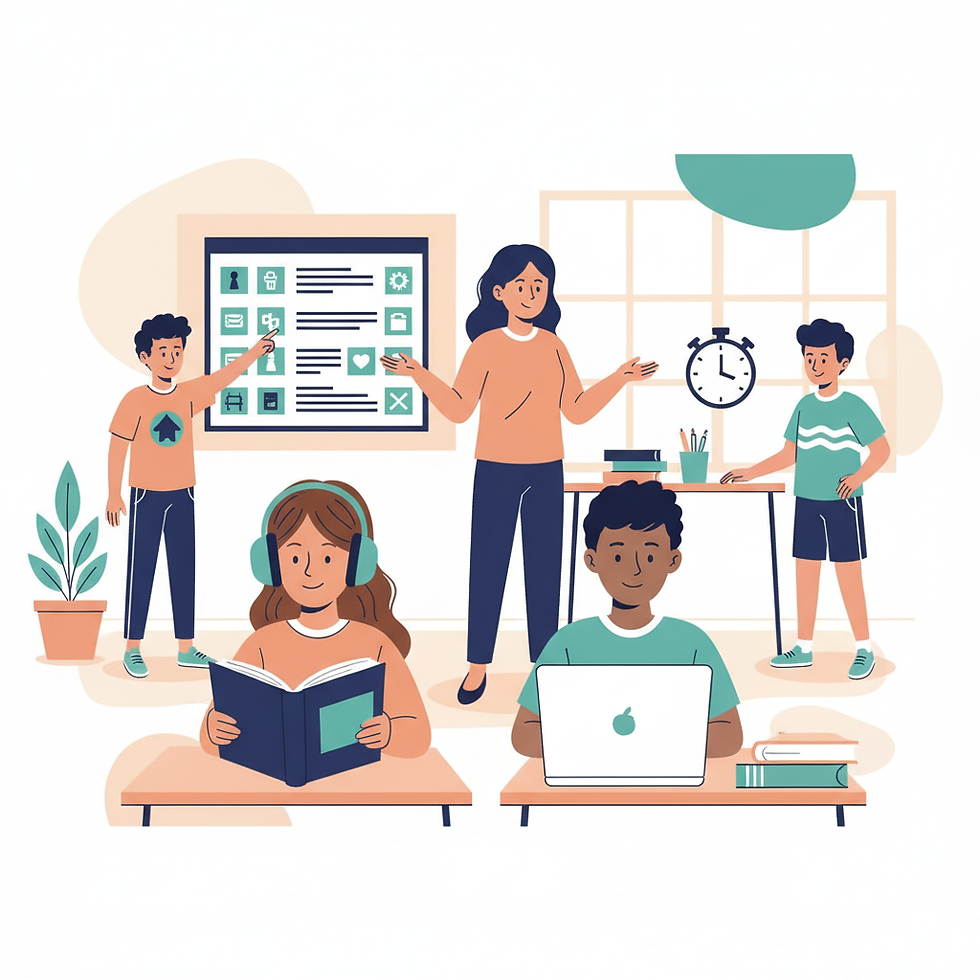
Section 504 mandates that schools provide eligible students with FAPE, which is delivered through a combination of services:
Regular or special education
Related aids and services
Supplementary aids and services (often called accommodations)
The fundamental purpose is to meet your child's individual educational needs as adequately as the needs of non-disabled students are met.
Types of Educational Services and Placement
FAPE under Section 504 can take several forms depending on your child's needs:
1. Regular Classroom Education
Many students with Section 504 Plans receive all their instruction in regular education classrooms. Their needs are met through accommodations and supports provided within that setting.
Example: A student with ADHD who receives extended time on tests, preferential seating, and organizational supports but participates fully in general education classes.
2. Regular Classes with Supplementary Services
Students may be educated in regular classes along with supplementary aids and services (accommodations). This is the most common model for Section 504 students.
Example: A student with diabetes who attends all regular classes but has accommodations for health monitoring, snacks, bathroom breaks, and modified PE activities.
3. Special Education and Related Services
Section 504 can include special education services when needed. While this is more common under IDEA, Section 504 can provide specially designed instruction (SDI) if that's what the student needs.
Example: A student with a visual impairment who does not qualify for special education under IDEA may still be determined by the Section 504 committee to need orientation and mobility services (O&M), which is a related service that can be provided under Section 504.
4. Combination Settings
Some students receive a combination of services across different settings based on their needs.
Example: A student with a chronic illness who receives some instruction in the regular classroom and some through homebound services during medical treatments.
Academic Accommodations: Changing How Students Learn
Accommodations are adjustments designed to reduce or eliminate the effects of a student's disability on academic tasks. Remember, accommodations change how students learn or demonstrate knowledge, not what they learn.
The Four Categories of Accommodations
The Section 504 Team should consider whether changes are required in these four areas:
1. Presentation Accommodations (How Information is Delivered)
Examples:
Providing an outline or notes before lectures
Using visual aids and graphic organizers
Repeating or rephrasing instructions
Providing written copies of verbal instructions
Highlighting key information in texts
Breaking complex directions into smaller steps
Using large print materials
Providing audio recordings of text
Color-coding materials for organization
Minimizing visual distractions on worksheets
Real-world example: A student with ADHD receives a structured outline at the beginning of each class showing the day's activities and key learning points, helping them stay focused and organized.
2. Response Accommodations (How Students Demonstrate Knowledge)
Examples:
Allowing typed instead of handwritten responses
Permitting verbal responses instead of written
Using a scribe for written work
Allowing use of speech-to-text software
Providing access to a calculator when calculation isn't being assessed
Allowing graphic organizers for essay planning
Permitting alternative project formats
Using multiple-choice instead of essay for students with writing disabilities (when writing isn't being assessed)
Real-world example: A student with dysgraphia (difficulty with handwriting) types all assignments and tests on a laptop, removing the barrier of handwriting while still demonstrating their knowledge of the content.
3. Setting Accommodations (Where Learning Occurs)
Examples:
Preferential seating (front of class, away from distractions)
Testing in a separate, quiet location
Small group testing environment
Reduced distractions testing area
Special lighting or acoustics
Adaptive or specialized furniture
Access to a sensory break space
Designated workspace with minimal visual distractions
Real-world example: A student with anxiety takes tests in the counselor's office with one other student, reducing the stress of the large classroom environment and enabling them to focus and perform.
4. Timing and Scheduling Accommodations
Examples:
Extended time on tests and assignments (often time-and-a-half or double time)
Frequent breaks during long tasks
Breaking tests into multiple sessions
Allowing late submission of homework
Flexibility with assignment due dates during medical episodes
Scheduling high-stakes tests at optimal times of day
Extra time between classes for transitions
Modified school day schedule
Real-world example: A student with ADHD receives time-and-a-half on all tests and assignments and is permitted to take a 5-minute break after every 20 minutes of testing to maintain focus and reduce fatigue.
Specific Accommodation Examples by Need Area
For Students with Attention and Executive Function Challenges (ADHD, etc.)
Organizational Support:
Daily planner with teacher verification
Checklists for multi-step assignments
Color-coded folders or binders for each subject
Copies of class notes or peer notes
Weekly organization check-ins
Breaking long assignments into smaller chunks with separate due dates
Environmental:
Preferential seating away from windows, doors, and high-traffic areas
Use of privacy boards or carrels during independent work
Minimal visual clutter in workspace
Access to fidget tools or standing desk
Instructional:
Visual and verbal instructions
Frequent check-ins for understanding
Visual timers to show time remaining
Signals or cues to redirect attention without drawing attention to the student
Testing:
Extended time
Testing in quiet location
Breaks during testing
Tests read aloud or access to text-to-speech
For Students with Anxiety, Depression, or Emotional Disabilities
Environmental:
Identified safe space to visit when overwhelmed
Scheduled check-ins with counselor
Option to take breaks without asking
Access to stress management tools
Academic:
Advance notice of changes in routine
Test anxiety accommodations (separate setting, extended time)
Modified presentation requirements
Excused tardiness related to counseling appointments
Social/Behavioral:
Reduced oral presentations or alternative formats
Option to work individually instead of in groups
Support for re-entry after absences
Behavior plan with positive reinforcement
For Students with Chronic Health Conditions
Medical Management:
Unlimited access to water and bathroom
Permission to eat snacks as needed
Self-administration of medication
Access to school nurse without restriction
Storage of medical supplies in classroom
Attendance and Academic:
Excused absences for medical appointments and illness
Extended time to make up work after absences
Modified deadlines during medical episodes
Reduced homework load during periods of illness
Priority registration for classes to avoid scheduling conflicts with treatment
Physical:
Modified physical education activities
Extra time for transitions between classes
Permission to leave class early to avoid crowded hallways
Access to elevator if needed
For Students with Learning Disabilities (Dyslexia, Dyscalculia, Dysgraphia)
Reading Supports:
Text-to-speech software
Audiobooks or digital texts
Extended time for reading assignments
Highlighted or annotated texts
Reduced reading load when appropriate
Writing Supports:
Speech-to-text software
Use of laptop or tablet for all written work
Graphic organizers for writing assignments
Extended time for writing tasks
Reduced length requirements when appropriate (without changing learning objective)
Math Supports:
Calculator for non-calculation tasks
Math fact charts or multiplication tables
Graph paper for alignment
Extended time for math tests
Concrete manipulatives
For Students with Physical Disabilities or Mobility Impairments
Physical Access:
Accessible classroom location (ground floor or near elevator)
Adaptive physical education
Modified participation in activities
Extra time between classes
Accessible seating and desk arrangements
Assistive Technology:
Specialized computer equipment
Adaptive keyboards or switches
Speech-to-text or text-to-speech software
Book holders or page turners
For Students with Sensory Impairments (Vision, Hearing)
Visual Impairments:
Large print materials
Magnification devices
Preferential seating for optimal viewing
Extra time for visual tasks
Braille materials if needed
Screen reader software
High contrast materials
Hearing Impairments:
Preferential seating near instruction
FM system or assistive listening device
Captioned videos
Visual alerts for auditory signals
Interpreter services if needed
Copy of notes or outlines
Related Aids and Services
Beyond accommodations, Section 504 requires schools to provide related aids and services, supportive services needed for the student to receive FAPE.
Behavioral and Mental Health Services
Counseling Services: Schools must provide counseling services to students with disabilities without discrimination. This may include:
Individual counseling sessions
Group counseling
Social skills training
Mental health support services
Social Work Services: Support from social workers for students whose disabilities impact their social-emotional functioning or require connection to community resources.
Behavioral Support Services: When behavior is disability-related, individualized behavioral supports may include:
Functional Behavioral Assessment (FBA) to understand the cause of behaviors
Behavioral Intervention Plan (BIP) with specific strategies
Training for staff on supporting the student
Crisis intervention procedures
Positive behavioral supports and reinforcement systems
Medical and Health Services
Medical Services for Diagnostic and Evaluative Purposes: The school must provide medical assessments needed to determine eligibility and services at no cost to parents.
Administration of Medication: Schools must permit and assist with medication administration when this is a related aid or service necessary for FAPE. This includes:
Allowing students to self-administer medication (inhalers, insulin, etc.)
School staff administering medication
Monitoring of medication effects
Individual Health Plans (IHP): For students with chronic health conditions, an Individual Health Plan must be incorporated into the Section 504 Plan. This includes specific procedures for managing the condition at school.
Texas-Specific Health Requirements: Schools in Texas have specific obligations for certain health conditions:
Diabetes Management:
A diabetes management and treatment plan must be developed with parent and physician
IHP is incorporated into the Section 504 Plan
Section 504 team (including school nurse if assigned) develops the plan
Seizure Management:
Parents may submit a seizure management and treatment plan developed with physician
School nurses in Texas must complete agency-approved online training on managing students with seizure disorders
Emergency procedures must be in place
Anaphylaxis:
School boards must create and adopt policy for care of students at risk for anaphylaxis
Policy based on Texas Department of State Health Services guidelines
Emergency action plans required
Mobility and Physical Services
Transportation: Transportation must be provided as needed for students with disabilities to access their educational program, including:
Accessible transportation
Accommodations on the bus (assigned seating, health monitoring)
Modified drop-off/pick-up arrangements
Occupational and Physical Therapy: For students with visual impairments not eligible under IDEA, or for students who need these services to access their education.
Orientation and Mobility Services: For students with visual impairments, orientation and mobility services help them navigate the school environment safely and independently.
Assistive Technology
Schools must provide assistive technology devices or services when necessary for FAPE:
Low-tech examples:
Pencil grips
Slant boards
Graphic organizers
Timers
Noise-canceling headphones
High-tech examples:
Computers or tablets
Text-to-speech software
Speech-to-text software
Communication devices
Specialized software for learning disabilities
One-on-One Support
In some cases, a student may need:
A one-on-one aide for safety or behavioral support
A health aide for medical needs
Support during specific activities (such as transitions or lunch)
Auxiliary Aids and Services for Effective Communication
Section 504, enforced consistently with Title II of the ADA, requires schools to ensure effective communication for individuals with disabilities by providing auxiliary aids and services.
The goal is to ensure communication is as equally effective for individuals with disabilities as it is for those without disabilities.
Examples of Auxiliary Aids
For students with hearing impairments:
Qualified sign language interpreters
Note takers
Real-time captioning (CART)
Written materials to supplement verbal communication
For students with visual impairments:
Braille materials
Large print materials
Screen reader software
Optical readers
Audio recordings
For students with communication disabilities:
Augmentative and alternative communication (AAC) devices
Communication boards
Speech-generating devices
For parents/guardians with disabilities:
Interpreters for meetings
Materials in accessible formats
Assistive listening systems
Access to All Programs and Activities
Section 504 ensures students receive equal access and equal opportunity to participate in all educational aids, benefits, and services.
Extracurricular Activities
Schools must provide equal opportunity for participation in:
Athletics:
Club sports
Intramural sports
Interscholastic sports
Necessary accommodations for participation (modified rules, equipment adaptations, health accommodations)
Clubs and Organizations:
Academic clubs
Special interest groups
Student government
Service organizations
Social clubs
Recreational Activities:
Recess and playground activities
After-school programs
School dances and social events
Field trips
Support Services
Counseling Services: Access to school counselors for:
Academic planning
Course selection
College and career counseling
Social-emotional support
Library and Media Services: Equal access to library resources with necessary accommodations (accessible computers, assistive technology, extended checkout).
Advanced Academic Programs
Students receiving Section 504 services have the right to participate in advanced programs with reasonable accommodations:
Advanced Placement (AP) Courses:
Access to AP courses with accommodations
Dual Enrollment:
Participation in college courses while in high school
Accommodations in both high school and college settings
Gifted and Talented Programs:
Cannot be excluded solely because of disability
Accommodations provided within the program
Honors Courses:
Access with appropriate supports
Same grading and credit as students without disabilities
Program Access (Physical Accessibility)
While this may seem obvious, it's an important protection: Schools must ensure programs are accessible to students with disabilities.
For schools built before June 4, 1977: Programs must still be accessible to students with disabilities, often achieved by relocating activities. For example, moving a class to an accessible floor rather than requiring a student in a wheelchair to navigate stairs.
For all schools:
Accessible pathways to all programs
Accessible restrooms
Accessible technology
Modified equipment for PE and sports
Special Instruction for Behavioral Needs
When a student's disability impacts their behavior, specialized instruction may be necessary.
Behavioral Intervention Plans (BIP)
If evaluation shows that challenging behavior is caused by the student's disability, the Section 504 Plan must identify individualized behavioral supports, often documented in a BIP.
A BIP should include:
Results of a Functional Behavioral Assessment (FBA) identifying the function of the behavior
Specific preventive strategies to reduce problem behaviors
Replacement behaviors to teach (appropriate alternatives)
How staff should respond to behaviors (both desired and problem behaviors)
Positive supports and reinforcement systems
Data collection procedures
Crisis intervention procedures if needed
Purpose of behavioral supports:
Reduce or eliminate challenging behaviors
Teach acceptable replacement behaviors
Keep the student in the least restrictive environment
Prevent disciplinary removals for disability-related behaviors
How Services Are Determined
Remember, all services and accommodations must be:
1. Individualized: Based on your child's specific needs, not based on their diagnosis or what the school typically provides.
2. Evidence-Based: Supported by the evaluation data and ongoing progress monitoring.
3. Sufficient to Provide FAPE: Designed to meet your child's needs as adequately as non-disabled students' needs are met.
4. Implemented with Fidelity: Provided consistently and as written in the plan.
The Bottom Line
Section 504 provides access to a comprehensive range of services and accommodations:
Academic accommodations in presentation, response, setting, and timing/scheduling
Related aids and services including counseling, health services, and behavioral supports
Assistive technology from low-tech to high-tech solutions
Auxiliary aids for effective communication
Access to all programs including extracurricular activities and advanced academics
Health services with Individual Health Plans for chronic conditions
Behavioral supports including FBAs and BIPs when needed
Physical accessibility to ensure program access
The key is that services must be tailored to your child's individual needs and designed to provide equal access to educational opportunities. If education were a race, Section 504 ensures your child has the custom equipment, supports, and adjustments they need to run that race as effectively as everyone else.
Understanding what's available helps you advocate for the specific services your child needs to succeed.
Next in this series: Discipline and Your Child's Section 504 Rights
Previous article: What Protections Does a 504 Plan Provide?
Need Help Identifying the Right Accommodations for Your Child?
Our team can review your current plan and suggest practical, research-based supports. Learn more about our Special Education and Section 504 Advocacy Services or request a free consultation.


